



In my previous article about Security-IN-the-Cloud, I touched on the shift from traditional perimeter-based security to data-based security. This shift brings an additional change in the governance of IT and cyber security – new capabilities that modern organisations and their IT security specialists need to have. In this article, I want to share the top five such capabilities which, at least in my opinion, are the most important.
1. Soft and social skills for IT security teams
To be closer to the business in order to understand the organisation’s unique vulnerabilities, strengths, and industry- or business-specific threats.
Some say it is fine if IT people are not social and sit somewhere in the basement with their servers and wires. Others are even afraid to cross their path – better not to, and contact IT only when it is a matter of life and death. I think this is the wrong way of thinking, stemming from a lack of general IT knowledge and business decision-makers’ lack of interest in their data security.

In modern IT security, soft skills take on a slightly different meaning – while social communication and teamwork are important, critical thinking and even general psychology are an even more important skill set for a modern IT security specialist. He or she needs to:
- think like the bad guys,
- know social engineering techniques to identify possible threats such as phishing attacks,
- know how other employees and customers of the organisation are likely to respond to threats, and how to raise their awareness and train their resilience,
- be closer to the business to understand the organisation’s unique vulnerabilities, strengths, and industry- or business-specific threats,
- work well under pressure and be able to quickly prioritise actions to minimise the damage should an attack occur.
Having these soft and social skills together with technological knowledge lays down the framework for IT and IT security specialists to perform their duties in the modern era.
2. Threat and cyber risk assessment skills
To assess what is relevant and select appropriate measures – a compromise between lock-down and innovation.
During my career, I have seen multiple cases where old-school IT specialists had no problem defending huge budgets for higher-than-needed-grade appliances as a risk mitigation measure – for a risk whose exposure was many times lower than the price of the appliance. And guess what? I have also seen those organisations end up in big scandals over data breaches, availability failures and personal data literally being washed away by a flood.
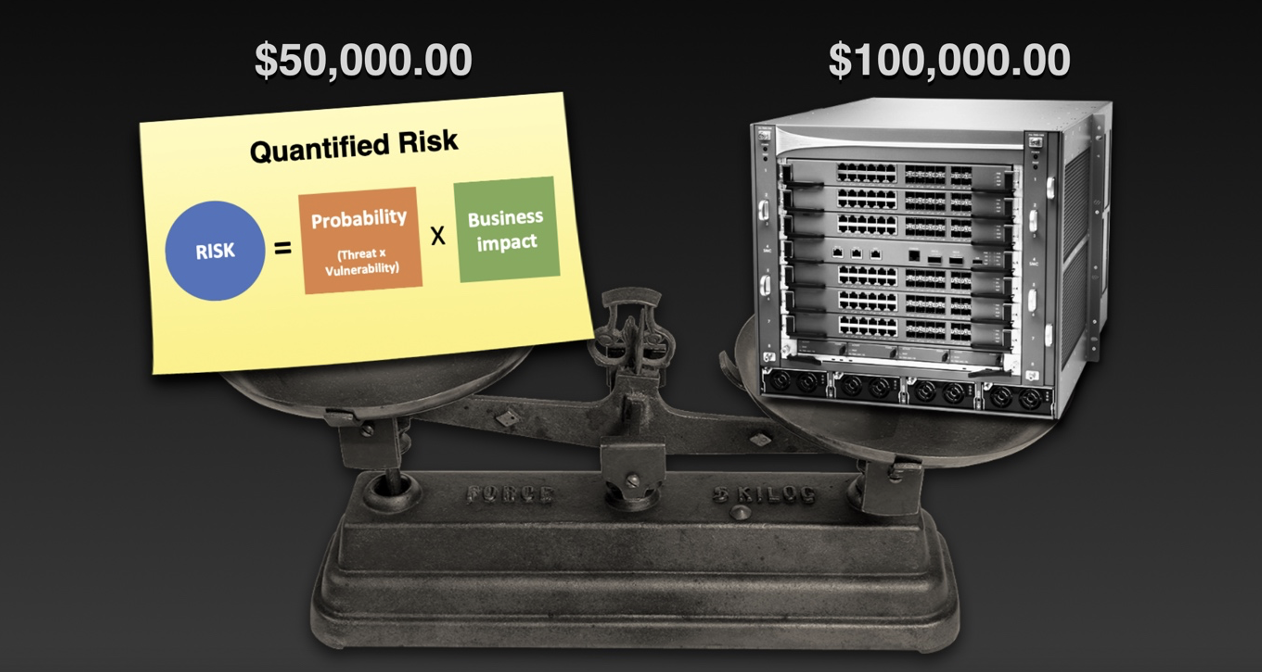
In the cyber era, when more and more effort and money are spent on cyberattacks, ransomware and mind-blowingly effective social engineering manipulation, organisations need good threat and risk assessment capabilities more than ever. It is no longer possible to isolate an organisation’s perimeter from all possible threats, and there is no chance of protecting your organisation from all possible attacks. By default, any organisation in the world has (and will continue to have) a number of vulnerabilities. No money can buy complete security or a “vulnerability-free” state, so the only way for the CEO to sleep better at night is to be aware of the risks and possible exposure, and to be sure that the responsible teams are skilled enough to select the most relevant security measures for business-critical risks.
A bonus hint: ask your IT team if they know the following equation, and ask for the ROSI when they request big CAPEX investments in hardware or software as a risk mitigation measure:

Where:
- Return on Security Investment (ROSI) = the return on investment (ROI) of the security control or solution to be implemented.
- Annualised Loss Expectancy (ALE) = estimated monetary loss from a single security incident × annualised rate of occurrence.
- Modified ALE (mALE) = modified annual monetary loss, taking into account the effectiveness of the expected security control.
- Cost of Solution = all costs associated with the solution’s purchase, implementation and maintenance.
3. Security “IN” the cloud
Assess and manage the security of cloud services and manage business data securely in the cloud.
To begin with, every modern organisation first needs to understand that the perception that, once in the cloud, all security is handled by the cloud provider is wrong.
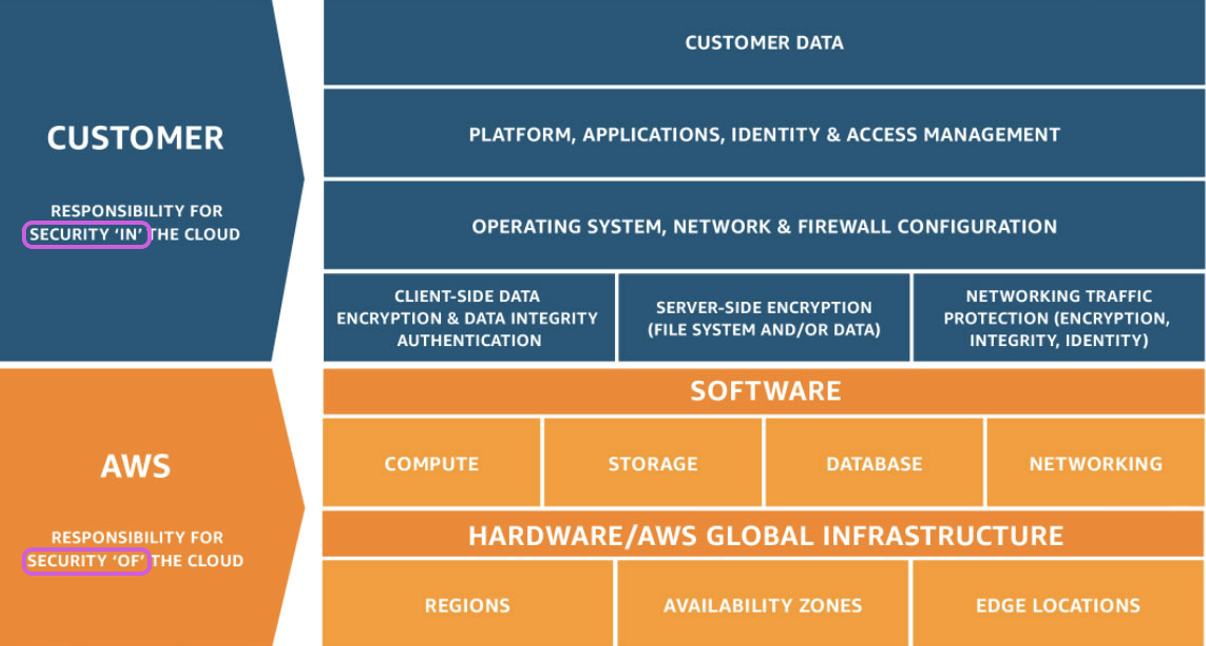
To better understand the scope of an organisation’s responsibility for Security-IN-the-Cloud, read my article Security IN the Cloud vs Security OF the Cloud.
“The cloud is already secure – why do I need to worry about additional security?”
The shared responsibility model must be communicated to and understood by BDMs (business decision-makers), not only IT specialists, because the main focus of Security-IN-the-Cloud is business data – the main asset of every modern organisation.
“Invest in the skills and knowledge of your IT staff, and dedicate their time to learning and keeping up with ultra-frequent changes in cloud services.”
Once the organisation learns the Shared Responsibility Model and knows its responsibilities, it needs to start by identifying internal personnel skilled in Dev(Sec)Ops, cloud-skilling internal teams and/or finding a trusted MSP partner able to leverage cloud security standards, cloud-specific best practices and security controls. (See our security and compliance services.)
4. DevSecOps and automation
Embed security into the business solution development lifecycle, not after it.
DevSecOps is an evolution in the way development teams approach security. Previously, security was something the system administrator or a separate security team had to tailor and “sew on” to applications and systems at the very end of the development process, or even after deployment to the production environment. Then security needed to be tested by a separate quality assurance (QA) team, and so on. Treating security as an afterthought led to famous data breaches and made the IT community think of new ways to embed security into each phase of the software development lifecycle.
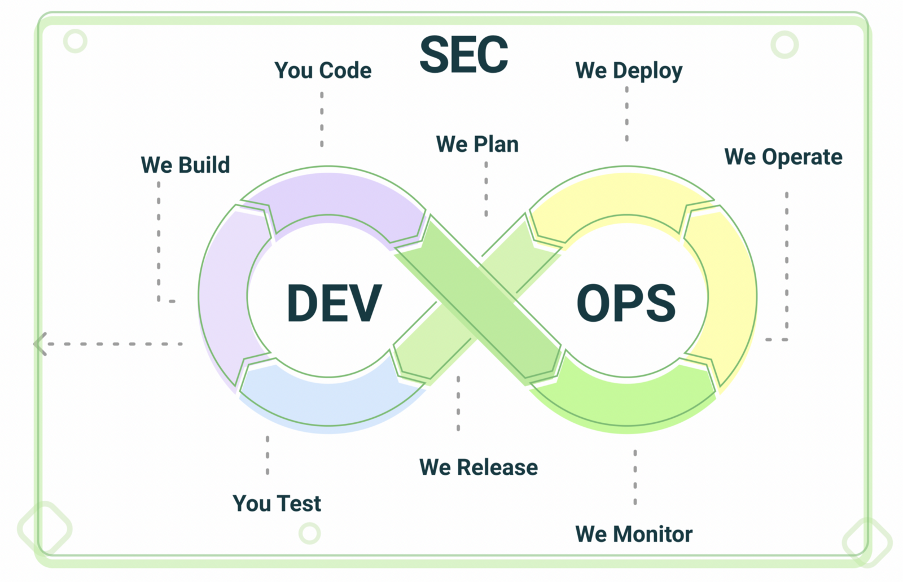
In our DevOps team, we have a saying: “Automation first”. Every time someone needs to perform a task, set up new AWS/Azure infrastructure or prepare a robust platform for a client’s new application deployment, the first question they need to answer is: is there even a slight chance I will need to perform the same task again, or might I need to rebuild the platform? If the answer is yes, the task must be performed not manually, but by writing automation scripts (e.g. Terraform, Ansible, Chef), aka Infrastructure as Code (IaC). The same approach should be embedded into the security of modern applications. As the famous DevSecOps manifesto states:
“By developing security as code, we will strive to create awesome products and services, provide insights directly to developers, and generally favor iteration over trying to always come up with the best answer before a deployment.”
5. Security monitoring (surveillance) and rationality
Be able to (I) identify real incidents among huge amounts of data and false-positive alerts, (II) eliminate them quickly, and (III) rationally assess risk, threat and loss.
Complex IT systems produce tons of logs, activity information and other data, which a modern IT specialist must be able to process in order to maintain security and compliance and optimise resources. They therefore need to be equipped with both the skills and the appropriate tools to consume loads of information and come up with the best plan of action within a matter of minutes. The ability to see the big picture by examining individual problem areas and tell exactly what needs to be fixed is what sets a sought-after modern IT specialist apart.
In a nutshell, a modern organisation needs to take a data-centric, “big data” approach to security.
Vytenis Sakalas was Head of Sales and Cloud (DevOps Evangelist) at BTT Cloud (now Skaylink) when this article was published.
